
Course Quality Assurance: TILT Assurance Review Cycle (ARC)
Why a cycle?
Course quality work at FHSU currently happens in pieces: a redesign conversation here, a review there, with nothing that formally connects the start of a redesign to what is learned after the course runs. ARC links those pieces into one loop. With the April 2027 ADA Title II / WCAG 2.1 AA deadline, the connection matters: accessibility is tracked from the first meeting rather than checked at the end. TILT instructional designers spent the summer of 2026 pulling the best components from the SUNY OSCQR Rubric and the OLC Scorecard to create this course quality assurance process specifically and intentionally tailored to the needs of FHSU courses and programs.
At TILT, instructional designers assist faculty in applying both the OSCQR rubric and the OLC Scorecard without overwhelming them with questions or unnecessarily repetitive processes. This is what makes ARC and its steps unique. Each component of ARC is clear and concise, and it builds the cycle that most faculty already follow; however, it establishes the cycle as a process to foster a community of ongoing cyclical improvement. The three parts of ARC are:
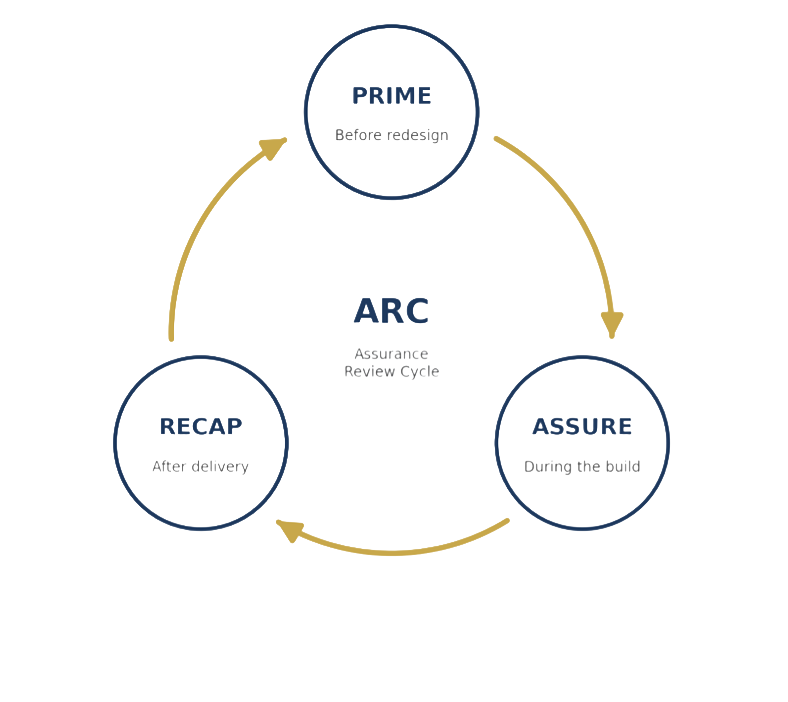
PRIME= Preliminary Review of Intention, Materials, and Expectations
Before a redesign, the faculty member and instructional designer inventory what exists, what the course or program intends, and where the gaps are against FHSU standards. One tool serves both program-level and single-course entry.
ASSURE= Alignment of Standards, Support, & Usability + Review of Engagement
The course quality review itself is used during the build and at sign-off. The FHSU Course Quality Review Dashboard: 46 standards across 12 groups, rated by designer, faculty, and reviewer, with dedicated accessibility tracking.
RECAP= Review of Engagement, Course Alignment, & Performance
A short post-delivery check on how students engaged, whether activities and assessments held their alignment, and how the course performed. Findings from RECAP feed the next PRIME (whether formal design/redesign, or independent cyclical improvement).
Additionally, TILT helps faculty ensure that their courses meet Regular and Substantive Interaction (RSI) requirements as defined by the U.S. Department of Education (DoE). Federal regulations require that distance education courses provide ongoing, meaningful interaction between instructors and students. By incorporating the TILT ARC standards and RSI guidelines, faculty can design and deliver high-quality online learning experiences that meet both institutional goals and federal compliance standards.
TILT ARC
Link to download components of the TILT ARC Dashboards (PRIME, ASSURE, and RECAP). The dashboards can only be downloaded. Please submit a ticket to TILT if you would like the dashboards customized to your course or program.
RSI
Learn more about RSI.
Additional Support & Resources
Value Rubrics
VALUE rubrics are open educational resources (OER) that faculty can directly download and use to assess their students’ work. AAC&U offers a series of example rubrics to assess different types of student work.
Bloom’s Taxonomy
These resources will help connect the dots between skill and ability levels and the digital tools and resources necessary to create a successful online course.